
Preventive measures against heat at work are grouped into three blocks: organizational (rearranging schedules, breaks, and hydration), technical (ventilating and cooling the environment, reducing heat from sources), and individual protection (breathable clothing, training, and health surveillance). Companies are required to apply them when risk assessments detect exposure to heat stress.
Heat isn’t just a nuisance: it’s an occupational risk that causes fatigue, loss of concentration, more accidents, and, in extreme cases, heatstroke. Among the most effective measures is directly cooling the workstation with a portable industrial cooler, but it’s not the only one. In this guide, you’ll see all the preventive measures against high temperatures ordered by effectiveness, from the most immediate to those that tackle the root of the problem.
Why heat is an occupational risk that must be prevented
When the ambient temperature rises and the body cannot dissipate its heat, thermal overload appears: excessive sweating, fatigue, cramps, headaches, and loss of concentration. If the situation is not corrected, it can lead to heatstroke, a medical emergency that occurs when body temperature exceeds 40°C and can be fatal.
Spanish regulations (Royal Decree 486/1997 and its amendment by Royal Decree-Law 4/2023) require companies to assess this risk and adopt measures when it exists. These are not just recommendations: the absence of preventive measures against heat is a punishable offense.
Organizational preventive measures
These are the fastest to implement and the first required by any heat risk assessment. They require no investment and reduce exposure immediately.
- Rearranging the workday. Schedule the most demanding tasks during the coolest hours (early morning) and avoid intense effort during the middle of the day.
- Breaks in cool areas. Establish periodic breaks in a conditioned space or in the shade, increasing frequency as the temperature rises.
- Staff rotation. Distribute the most exposed tasks among several workers to limit individual exposure time.
- Accessible hydration. Ensure fresh water is available near the workstation and encourage frequent drinking even if not thirsty.
- Progressive acclimatization. Gradually adapt new or returning workers, as the body takes between 7 and 14 days to get used to the heat.
Technical preventive measures: acting on the environment
Organizational measures reduce exposure, but when heat is structural (a workshop where machinery raises the temperature every day), you must act on the environment. These are the most effective measures because they attack the cause, not the symptom.
- Reducing heat at the source. Isolate or shield heat sources (ovens, motors), extract hot air near the source, and take advantage of natural ventilation when the outside temperature allows.
- Forced ventilation. Moving air with high-flow fans improves sweat evaporation and lowers the perceived temperature, which is especially useful in large warehouses.
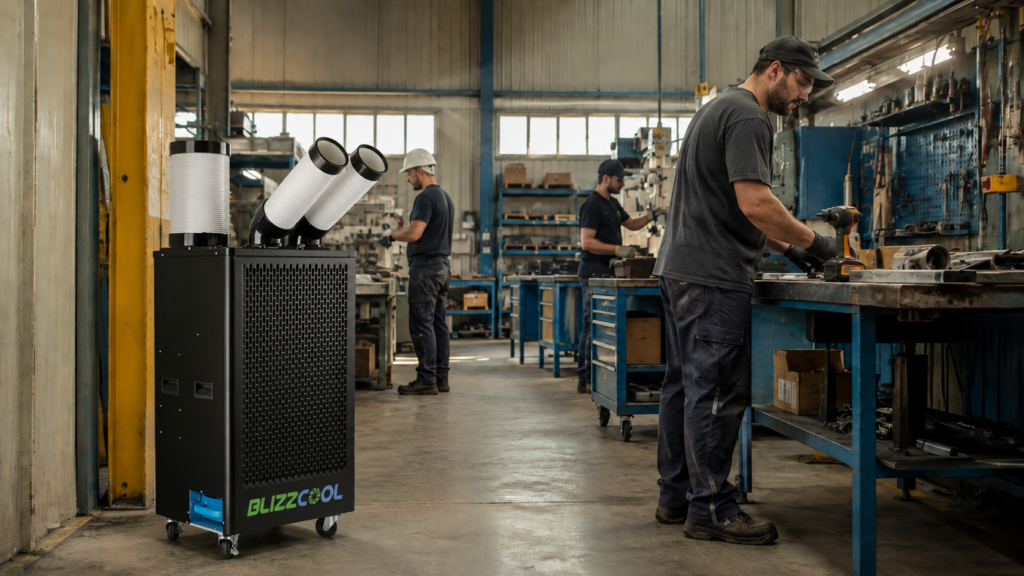
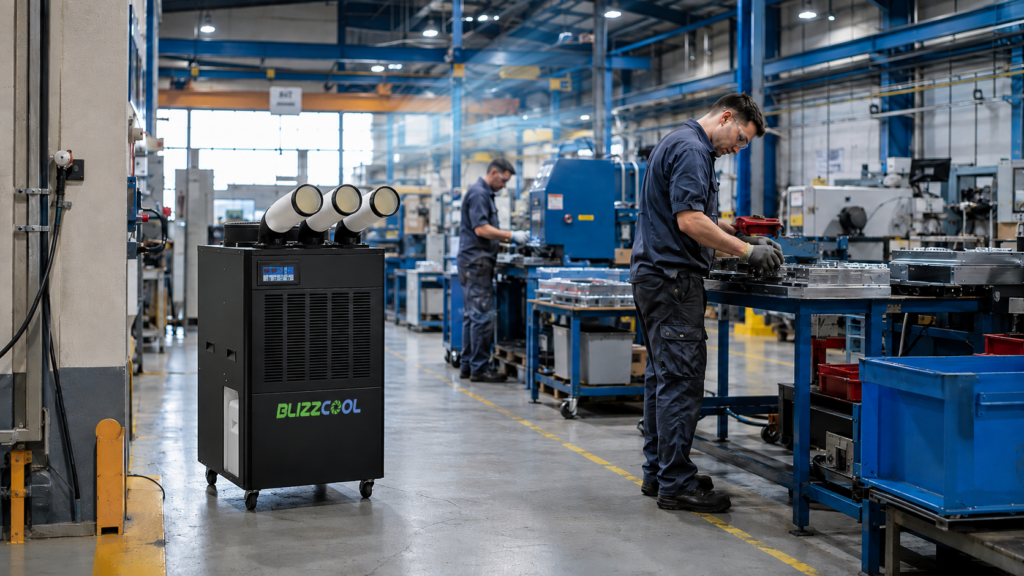
- Cooling the workstation. When ventilation isn’t enough, directing cold air at the operator with a portable cooler solves the critical point without needing to air condition the entire warehouse—which is expensive and unfeasible in spaces with high ceilings or open doors.
- Evaporative cooling. In open or semi-open spaces, misting and evaporative coolers lower the temperature with low energy consumption by taking advantage of water evaporation.
Individual protection measures and training
When the risk cannot be eliminated by collective measures alone, they are supplemented with individual protection and training.
- Appropriate clothing. Breathable fabrics in light colors; when mandatory PPE worsens the heat, consider active cooling garments like cooling vests.
- Training and information. Teach workers to recognize the symptoms of heat stress in themselves and their colleagues, and how to act in the event of heatstroke.
- Health surveillance. Pay special attention to people with pre-existing conditions, those on medication, or those with less acclimatization, as they are more vulnerable to heat.
How to prioritize measures against heat
The most effective prevention combines all three blocks, but in a specific order: first, reduce heat at the source and cool the environment (technical measures), then reorganize the work (organizational measures), and finally, individual protection, which should never be the only barrier. A workshop that only hands out water and light clothing but keeps the environment at 34°C still has an unsolved problem.
The choice of cooling system depends on the type of warehouse, and we detail it in this guide on how to lower the temperature of an industrial warehouse. At Blizzcool, the industrial cooling brand of INTEC Suministros Industriales, we advise on which solution fits each warehouse based on its size, activity, and temperature. Tell us about your case and we’ll guide you without obligation.