
High-performance industrial fans
Equipment designed to offer maximum thermal comfort and protection in demanding conditions. Efficient solutions that optimize productivity and guarantee a safe and cool work environment.
Ceiling
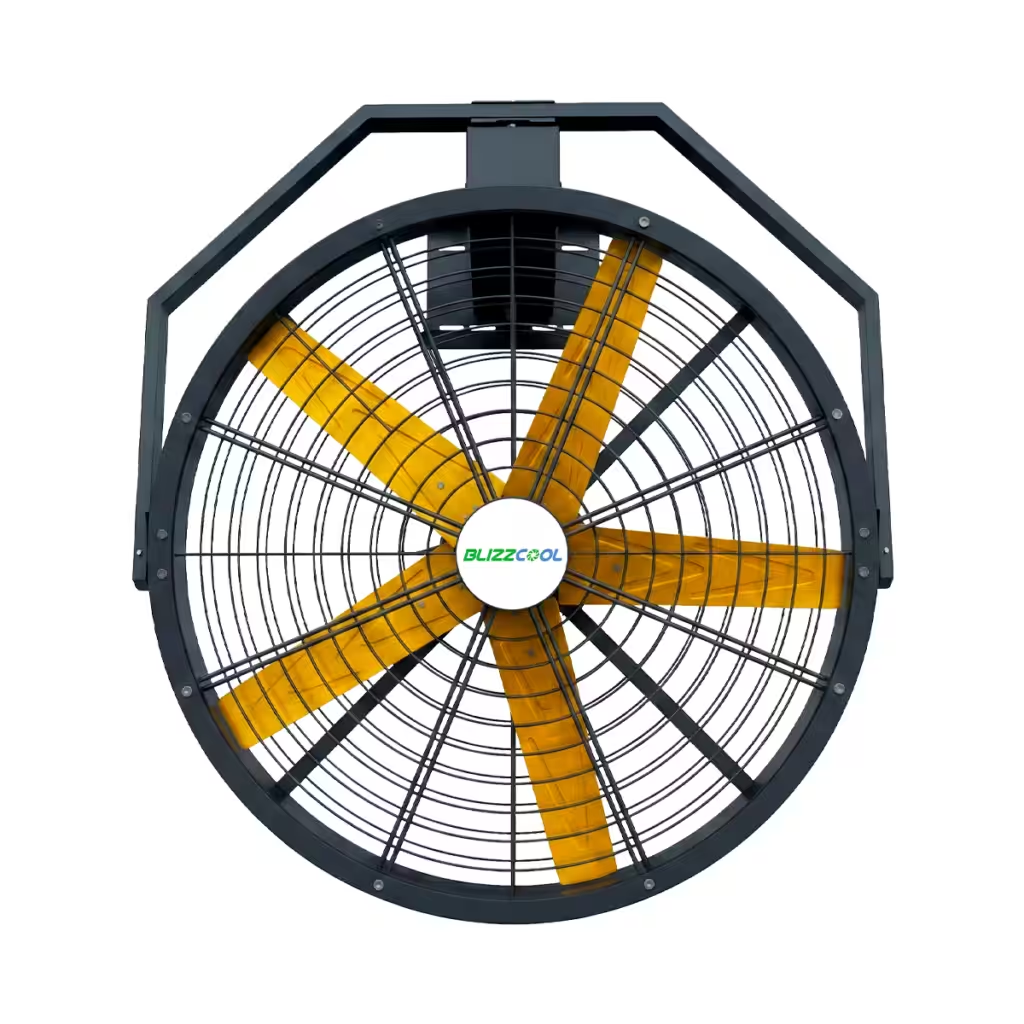
Wall
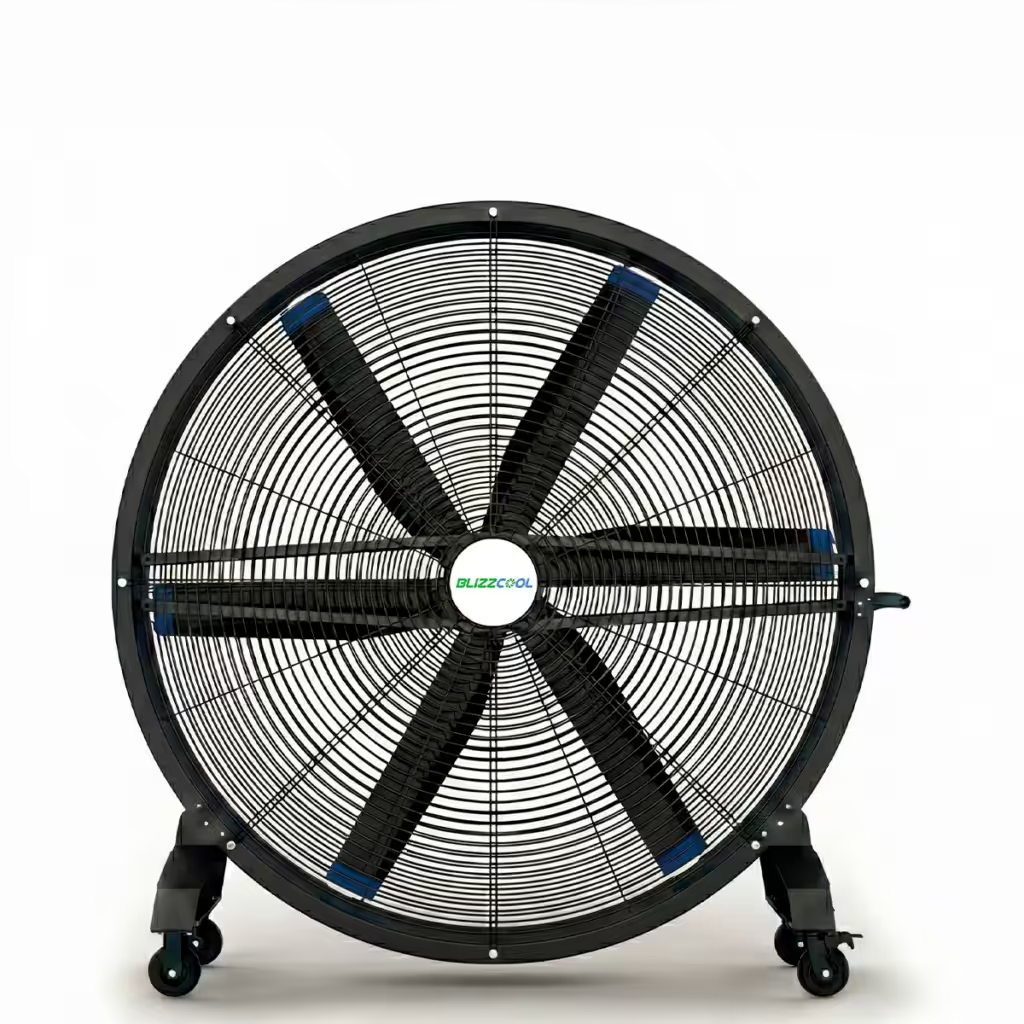
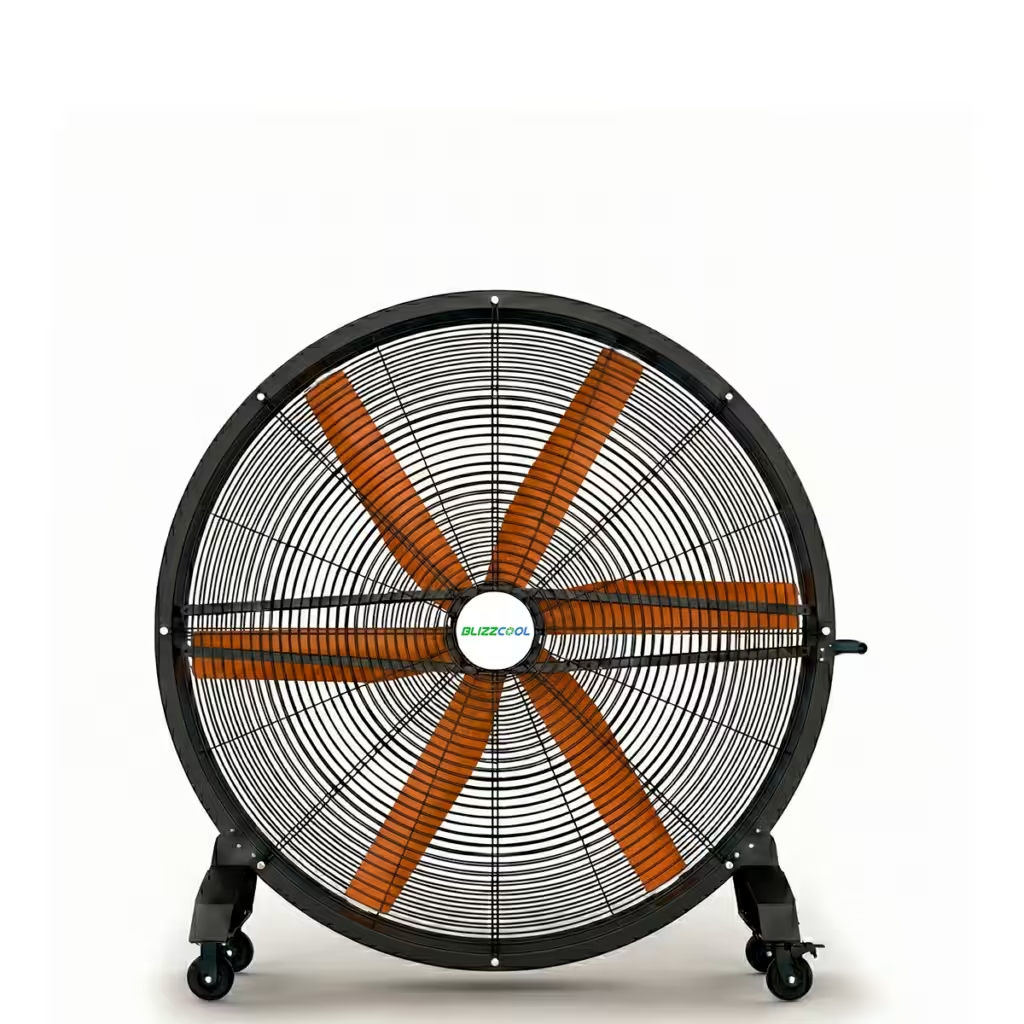
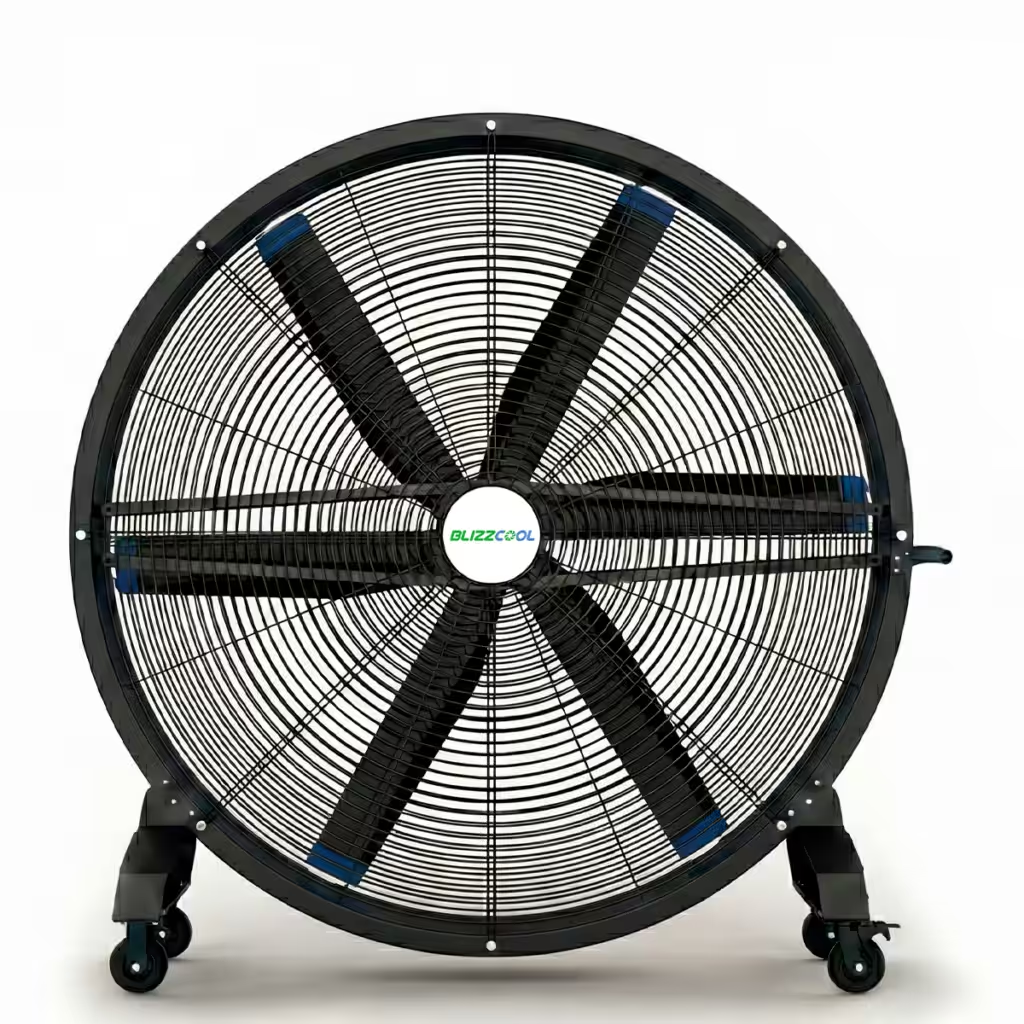
Portable
What type of industrial fan do you need?
Choosing the wrong type of fan is the most common mistake. A very powerful unit in a poorly ventilated or poorly oriented space moves air without cooling. One that is too small for the volume of the space does not solve the problem. This quick guide helps you get it right:
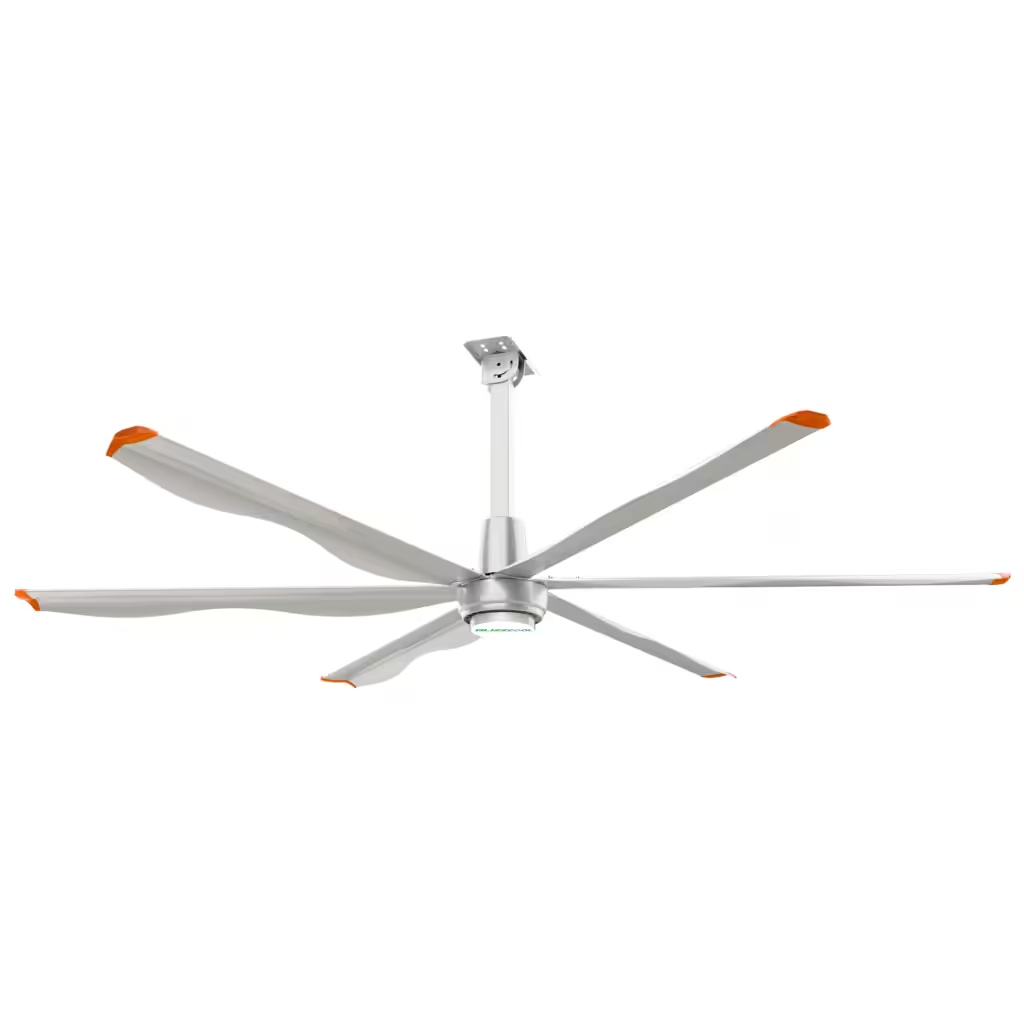
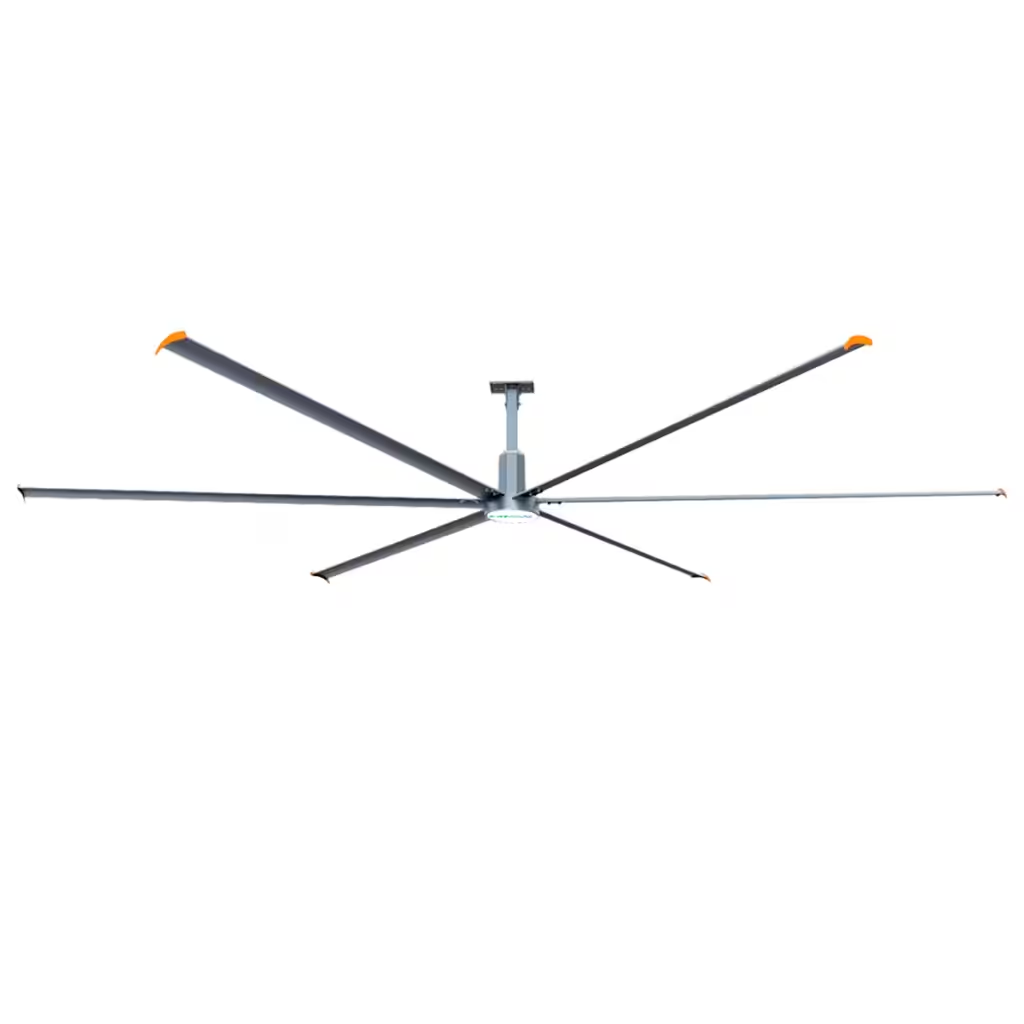
Industrial Ceiling Fan This is the most efficient option for industrial buildings with a clear height greater than 5-6 meters. Installed at the highest point, it moves the entire volume of air in the space homogeneously, eliminating heat pockets that accumulate under the roof. A single industrial ceiling fan can cool areas of up to 1,000-1,800 m² depending on the model. In winter, by reversing its rotation, it returns the accumulated warm air to the floor, reducing heating consumption. Ideal for: industrial buildings, logistics warehouses, sports halls, distribution centers.
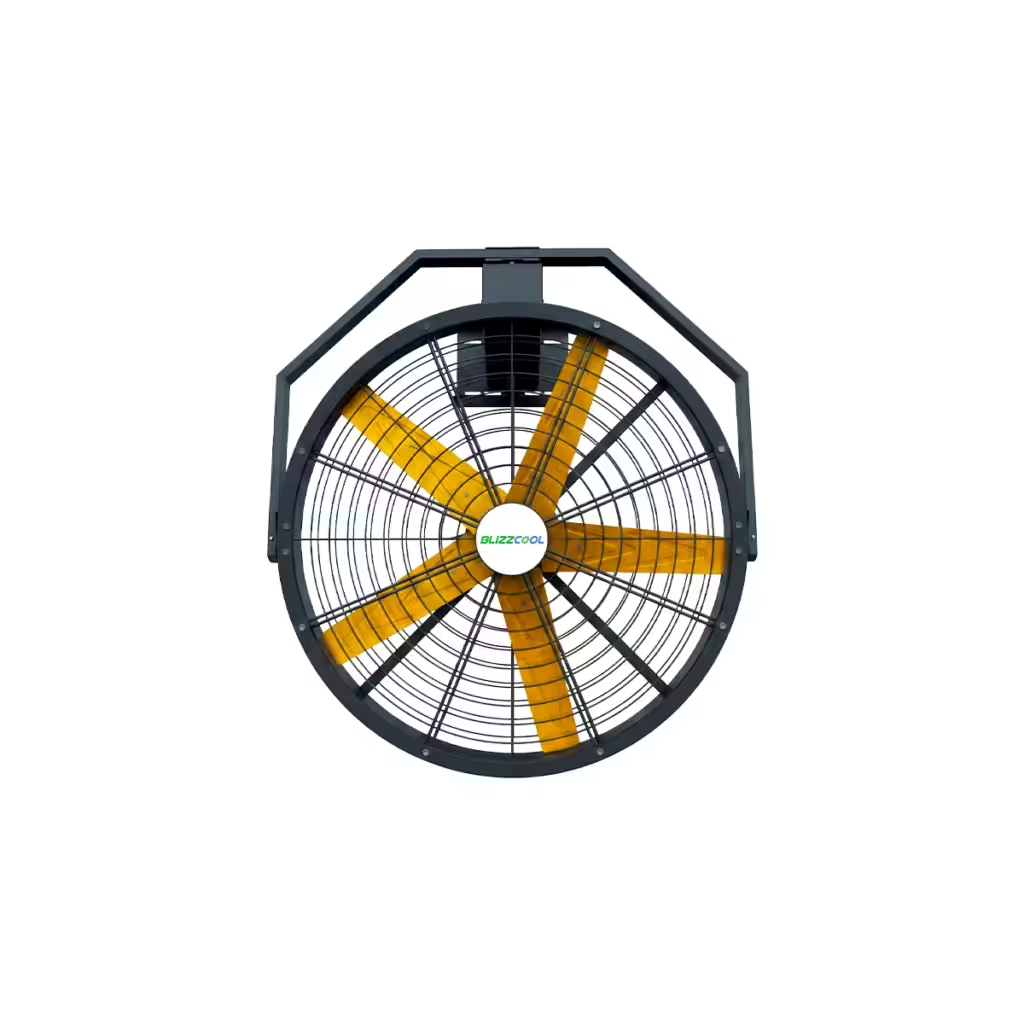
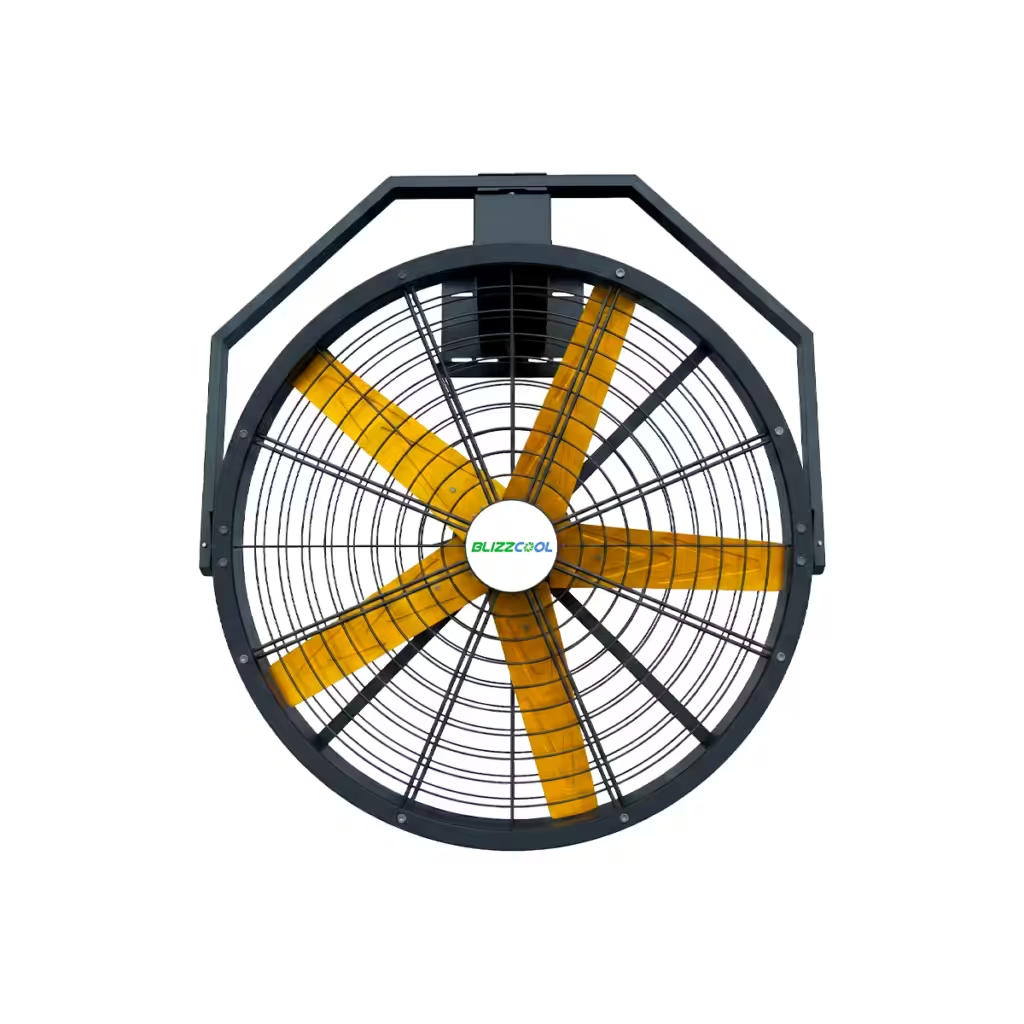
Industrial Wall Fan When the floor or ceiling is not an option—due to the layout of the building, the presence of machinery, or the height of the space—the industrial wall fan is the most effective alternative. It is installed at mid-height or elevated, directs the airflow directly over the work area, and completely frees up usable floor space. Its installation is simple and requires no construction work. Ideal for: vehicle workshops, industrial kitchens, production lines, loading and unloading areas.
Portable Industrial Fan When the need is temporary, the work area changes frequently, or outdoor cooling is required, the portable industrial fan offers maximum flexibility. Equipped with wheels or ergonomic handles, they can be relocated in minutes and direct the airflow exactly where it is needed at any given moment. Ideal for: construction sites, outdoor events, facilities under renovation, temporary work areas, restaurant terraces.
Comparison · Industrial Fans
| Techo | Pared | Portátil | |
|---|---|---|---|
| Cobertura | 500–1.800 m² | 50–200 m² | 50–250 m² |
| Diámetro | 2.400–6.100 mm | 600–1.200 mm | 1.200–2.000 mm |
| Consumo | ≤ 2 kW | 60–300 W | 60–300 W |
| Ruido | Muy bajo | 55–65 dB | 55–65 dB |
| Instalación | Fija en techo | Fija en pared | Sin instalación |
| Se puede mover | No | No | Sí |
| Uso en invierno | Sí | No | No |
| Uso en exterior | No | Parcial | Sí |
| Ideal para | Naves y almacenesTecho mín. 5–6 m | Talleres y fábricas | Obras y eventos |
Why an industrial fan and not an air conditioner?
This is the question many ask before choosing. The answer depends on the space, but in most industrial environments, active ventilation wins for several specific reasons:
Installation cost close to zero. An industrial fan does not require ducting, refrigerant gas, or specific electrical installation. Just plug it in and turn it on. An air conditioning system for a 500 m² warehouse can cost between €15,000 and €40,000 installed. A quality industrial fan, a fraction of that.
Spaces that cannot be air-conditioned. Warehouses with open doors, workshops with natural ventilation, or storage facilities with constant merchandise traffic do not retain the cold from an air conditioner. Industrial fans work precisely in these conditions: they move circulating air and generate a real thermal sensation without relying on an enclosed space.
Low consumption in continuous operation. A high-end industrial wall or portable fan consumes between 60 and 300 W depending on the model. An HVLS ceiling fan, despite moving enormous volumes of air, does not exceed 1.5-2 kW. Compared to the 5-15 kW of an equivalent air conditioning unit, the difference in the electricity bill is immediate.
Complement to the existing air conditioning system. If you already have HVAC or a split system, industrial fans better distribute conditioned air, eliminate temperature gradients, and allow you to raise the thermostat a couple of degrees without losing comfort. According to energy efficiency studies, this can reduce air conditioning consumption by 20 to 30%.
Sectors and Applications
Blizzcool industrial fans work in very different environments, but the common denominator is always the same: a large space where heat affects people, materials, or processes.
- Industrial Buildings and Production — Continuous ventilation during intensive work shifts, reducing thermal stress and improving concentration and performance.
- Warehouses and Logistics — Air circulation in spaces with constant merchandise traffic and open doors, where conventional air conditioning is unfeasible.
- Vehicle and Mechanical Workshops — Extraction of heat generated by engines and tools, with wall-mounted fans that do not occupy usable floor space.
- Hospitality and Restaurants — Ventilation on terraces, industrial kitchens, and dining areas without centralized air conditioning.
- Sports Halls and Gyms — Air renewal and humidity reduction in facilities with high occupancy and intense physical activity.
- Events and Temporary Spaces — Portable fans that can be installed and removed without construction, adaptable to any space configuration.
- Greenhouses and Agriculture — Temperature control and air circulation in crops where natural ventilation is insufficient.
- Shopping Centers and Retail Spaces — Improved comfort for customers and workers in areas without direct air conditioning or with heat accumulation due to lighting and foot traffic.
Frequently Asked Questions about Industrial Fans
What is the difference between an industrial fan and a domestic one?
The main difference lies in airflow, power, and durability. A domestic fan moves between 200 and 800 m³/h and is designed for occasional use. An industrial fan moves from 1,500 to over 10,000 m³/h depending on the model, is built for continuous operation during full shifts, and its components withstand demanding working conditions: dust, humidity, vibrations, and temperature.
How many square meters does an industrial fan cover?
It depends on the type. An industrial wall or portable fan effectively covers between 50 and 200 m² depending on power and airflow. An HVLS industrial ceiling fan can cover between 500 and 1,800 m² with a single unit. For very large spaces or those with complex layouts, it is common to combine several units strategically.
Can an industrial fan be used in winter?
Yes, especially ceiling fans. In winter, heat generated by heating or machinery rises and accumulates under the roof. By reversing the ceiling fan’s rotation, the warm air descends gently and evenly without creating an uncomfortable draft. This allows for maintaining a comfortable temperature in the work area with lower heating consumption.
Are industrial fans noisy?
It depends on the model and operating speed. HVLS ceiling fans, which rotate at low speed moving large volumes of air, are particularly quiet. For wall and portable fans, the noise level varies depending on the power and quality of the motor: professional-grade models are around 55-65 dB at maximum speed, comparable to a normal conversation.
What airflow do I need for my industrial building?
A general rule of thumb is to calculate between 30 and 60 air changes per hour for industrial environments with physical activity or heat generation. To calculate this: multiply the volume of the space (length × width × height) by the desired number of air changes per hour. The result is the minimum airflow in m³/h that your ventilation system should move. If you have doubts, contact us and we will help you size the correct solution.
Can I use an industrial fan outdoors?
Portable industrial fans are suitable for outdoor use as long as they are not directly exposed to rain. For fixed outdoor installations—covered terraces, outdoor loading areas—it is important to verify the equipment’s IP protection rating, which indicates its resistance to humidity and dust.