
Proven performance in real environments
Equipment designed to provide maximum thermal comfort and protection in demanding conditions. Efficient solutions that optimize productivity and guarantee a safe and cool work environment.
Industrial wall fan
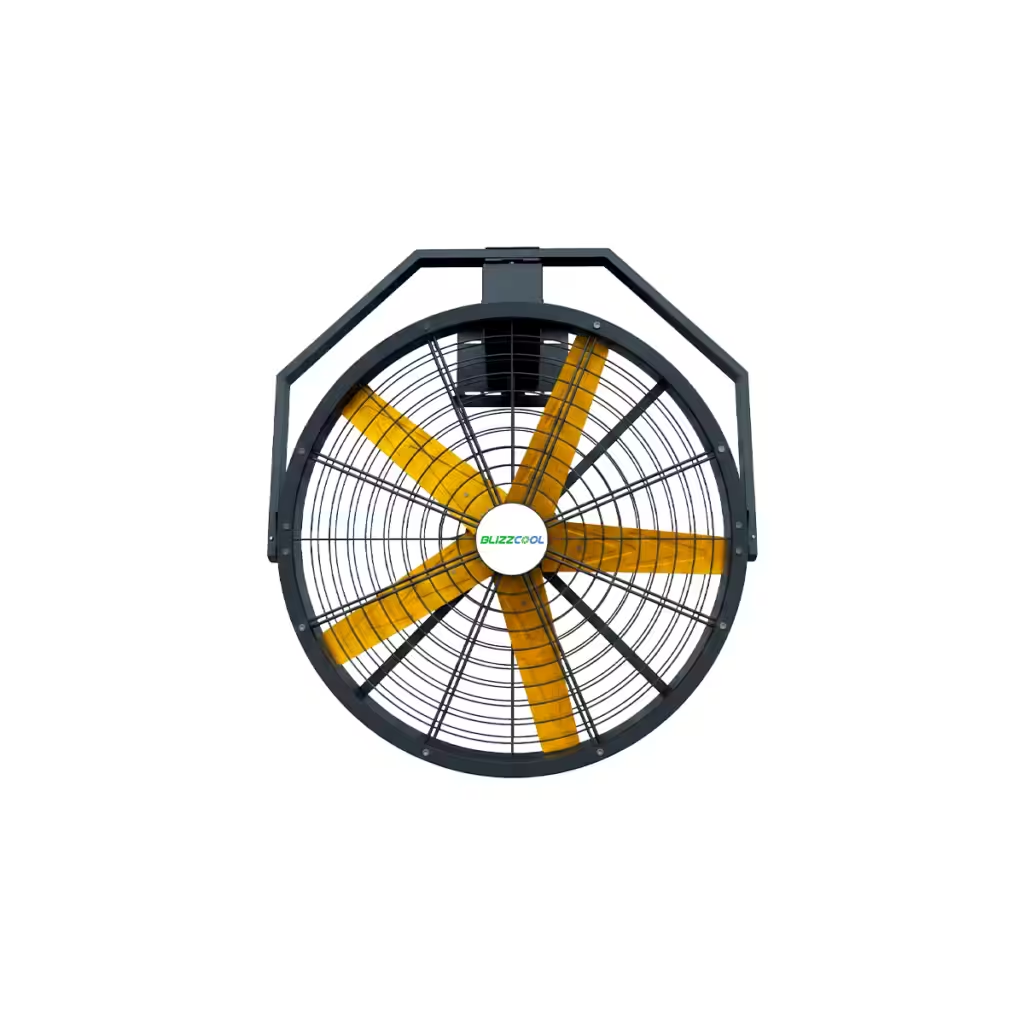
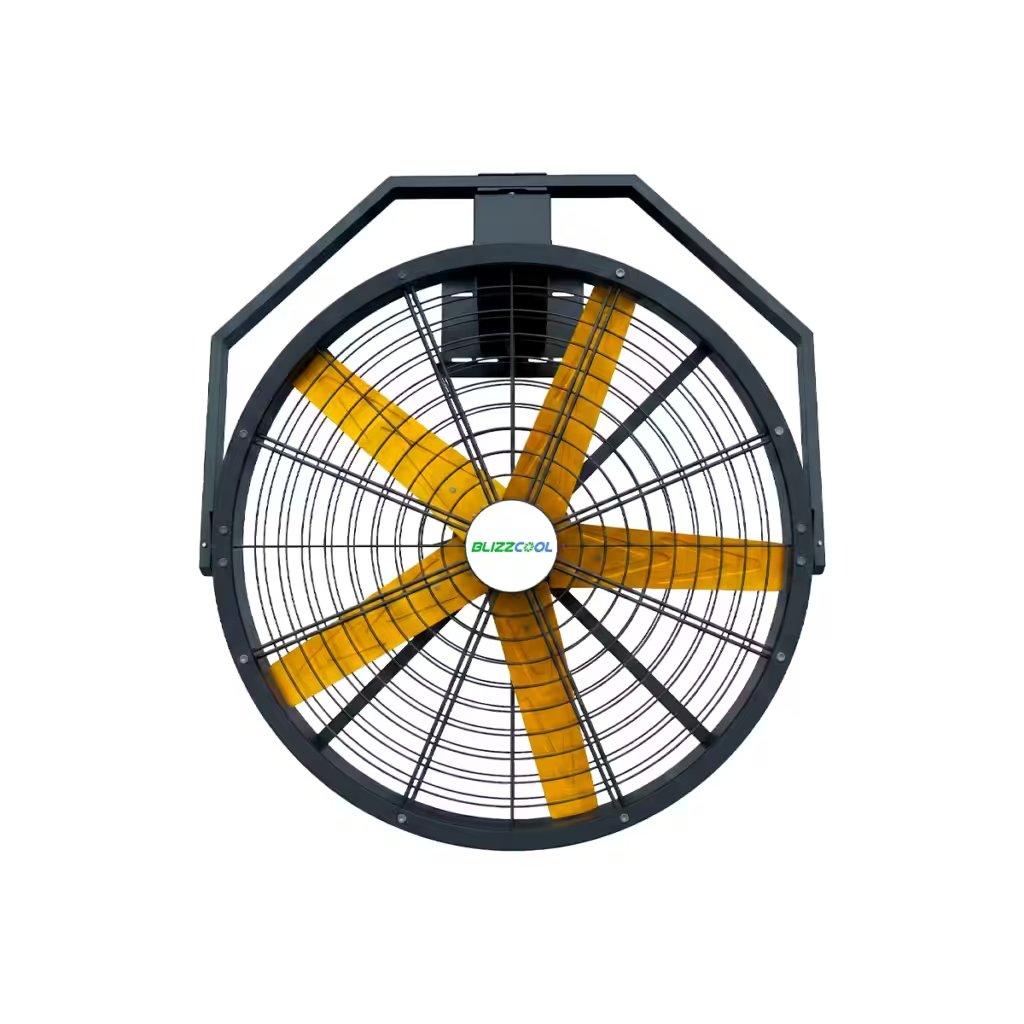
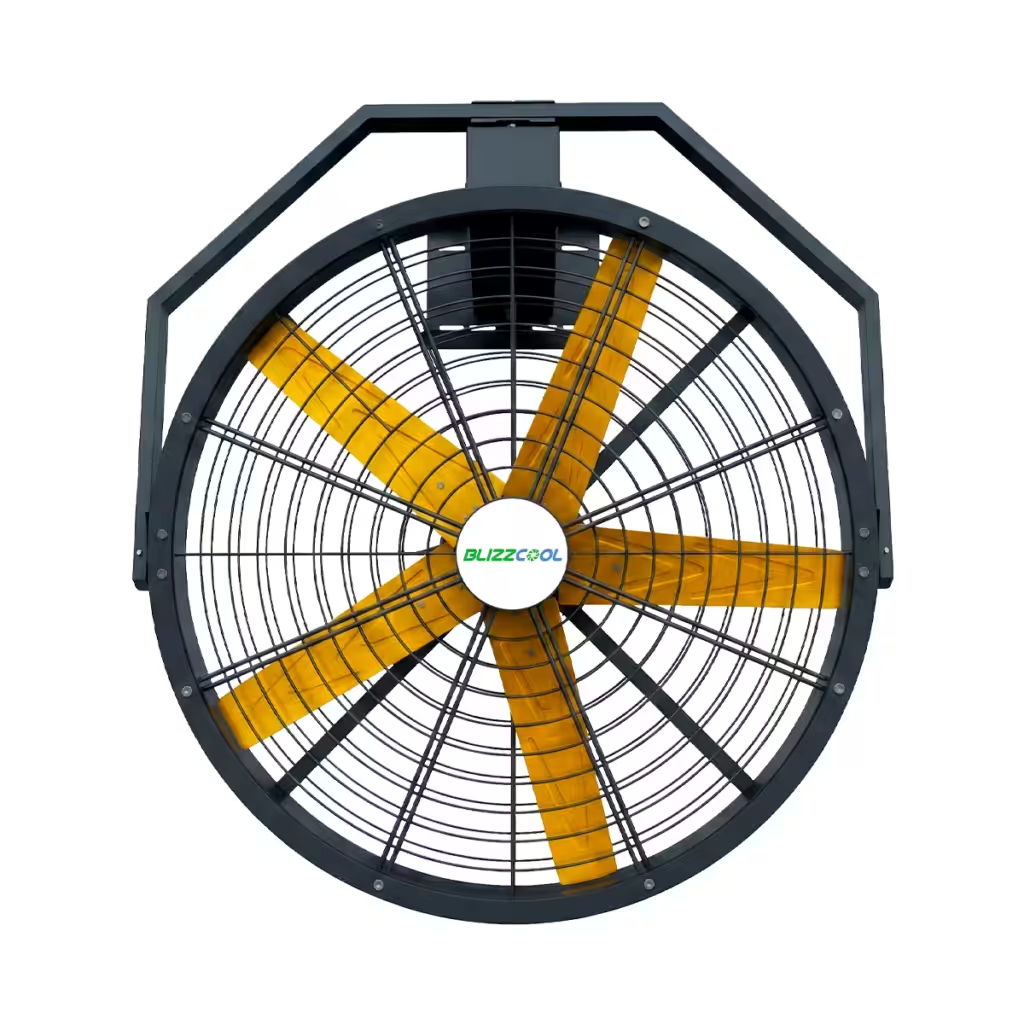
What the wall fan does that the ceiling fan can't
There’s a difference that’s rarely explained well: an industrial ceiling fan — especially HVLS models — is extraordinarily efficient at moving large volumes of air evenly throughout the space. But it can’t aim. It cools the general environment, not a specific point.
The industrial wall fan does exactly the opposite: it sacrifices global coverage in exchange for precision. You can direct it toward the welding station that generates the most heat, toward the three workers on the packing line, toward the oven area of an industrial bakery. The airflow reaches where you need it, not where the equipment decides to send it.
That’s why the two types don’t compete with each other: they complement each other. In facilities with an HVLS system installed, industrial wall fans cover intensive work areas where general ventilation isn’t enough. In spaces without high ceilings or without the possibility of roof installation, the wall fan is the primary solution.
The four factors that determine whether the purchase will work out
With equipment that will remain fixed on the wall for years, making the wrong choice is expensive. These are the criteria that really matter:
Diameter and airflow: sizing the space correctly
The blade diameter — between 40 and 75 cm in the most common models — directly determines the airflow in m³/h and the distance at which that airflow remains effective. For an individual workstation or an area up to 30-40 m², a 40-50 cm model is more than sufficient. For long corridors, production areas with multiple stations, or areas with high thermal load from machinery, a 60-75 cm model with an airflow between 5,000 and 10,000 m³/h is appropriate.
The most common mistake is buying based on price and ending up with equipment that moves too little air for the actual space. An undersized industrial wall fan works at maximum capacity without solving the problem.
Mounting height and angle: where people make the most mistakes
Installed too high, the airflow loses velocity before reaching the work area. Installed too low, it creates annoying direct drafts on people. The optimal height for an industrial wall fan is between 2.5 and 4 meters, with a downward tilt angle between 15° and 30°.
The practical rule: the larger the fan diameter and the greater its airflow, the higher the installation height can be while maintaining effectiveness. A 75 cm model with high airflow installed at 4 meters and 20° tilt can perfectly cover an area 15 meters deep.
IP protection: the criterion most ignored and most expensive to ignore
In a domestic installation, the IP rating doesn’t matter much. In an industrial environment where the fan will coexist with dust, steam, grease, cleaning products, or water splashes, the IP protection rating determines whether the equipment lasts two years or ten.
- IP44 — Protection against dust and water splashes from any direction. Sufficient for mechanical workshops, warehouses with ambient dust, or dry production facilities.
- IP55 — Protection against dust and direct water jets. Necessary in industrial kitchens, bakeries, facilities with frequent hose cleaning, areas with steam, or with airborne oils.
- IP65 or higher — For covered outdoor areas, cold storage facilities, or any installation with direct water exposure or extreme conditions.
Installing a fan with inadequate IP rating in a demanding environment isn’t a theoretical risk: it’s a guaranteed failure, with the replacement cost and activity downtime that entails.
Oscillating or fixed: it’s not an aesthetic question
An oscillating industrial wall fan distributes airflow in an arc of up to 90°, covering a larger surface with a single unit. It’s the logical choice when there are multiple workstations in the area or when the space layout may change.
The fixed-orientation model concentrates all airflow in a constant direction. It’s more effective for creating a directed current on a specific station, for generating cross-ventilation between two defined points, or for evacuating heat from specific machinery.
Sectors where the industrial wall fan is the standard solution
- Automotive and mechanical workshops — Pits, lifts, and machinery make the floor unusable for portable fans. The workshop wall fan is installed above each workstation at the exact height, with IP44 protection at minimum for environments with oils and particles.
- Industrial kitchens and bakeries — Steam, high temperatures, and floor hygiene requirements make wall mounting the standard solution. IP55 mandatory. Oscillation helps distribute air throughout the cooking area without creating cold drafts on workers.
- Loading docks and shipping areas — Open doors create hot airflow in summer that the industrial wall fan counteracts by creating a fresh air barrier in the work area, without interfering with forklift traffic.
- Production and assembly lines — Specific hot spots on the line where machinery or people density generates more heat than the rest of the facility. Wall installation addresses that area without needing to cool the entire space.
- Industrial locker rooms and break areas — Low-height spaces where neither the ceiling nor the floor are viable options. The industrial wall fan fits naturally and its installation at 2.5 meters guarantees comfortable airflow without direct drafts.
- Gyms and crossfit boxes — Training areas with high activity density where constant and directed airflow is needed. Adjustable orientation allows aiming toward the work area regardless of how the equipment is distributed.
Frequently asked questions about wall fans
At what height is an industrial wall fan installed?
The optimal height is between 2.5 and 4 meters depending on the model. For spaces with ceilings between 3 and 4 meters, the standard is to install it at 2.5-3 meters with 15-20° downward tilt. For facilities with higher ceilings, it can be raised to 3.5-4 meters by increasing the tilt angle to 25-30°. An oversized model installed high usually gives better results than a small one installed low.
What IP rating do I need for my environment?
Dry workshop with dust: IP44. Industrial kitchen or facility with hose cleaning: IP55. Covered outdoor area or environment with frequent water exposure: IP65. If you’re unsure between IP44 and IP55, choose IP55 — the extra cost is minimal and the difference in durability is significant.
Do I need an electrician to install an industrial wall fan?
Models with standard plug (single-phase 230V) don’t require an installer: they’re fixed to the wall with the included anchors and connected to any power outlet. Models with direct connection to the electrical panel or three-phase models do require a licensed electrician. In any case, for high installations with equipment over 10 kg, it’s advisable to have help to ensure anchor safety.
How much does an industrial wall fan consume per day?
A 40-50 cm model consumes between 60 and 130 W. The 60-75 cm models are between 150 and 250 W. In an 8-hour workday, a 130 W model has an energy cost below €0.20 at the average kWh price in Spain. For intensive use in 16-hour shifts, the cost remains marginal compared to any cooling alternative.
Can an industrial wall fan be used outdoors?
Yes, with the appropriate IP protection. For covered terraces or industrial porches, IP55 is sufficient. For installations with direct rain exposure or marine environments, IP65 is needed along with blades in anti-corrosive material. In coastal areas, marine aluminum or stainless steel are preferable to standard aluminum for the blades.
How often does an industrial wall fan need maintenance?
Maintenance is very simple: periodic cleaning of the blades to prevent dust accumulation that unbalances rotation, and annual inspection of the anchor and fixing screws. Models with brushless DC motors have no brushes or internal wear parts, which virtually eliminates motor maintenance. In very dusty environments, cleaning the blades every 2-3 months makes a difference in performance.