
Proven performance in real-world environments
Equipment designed to deliver maximum thermal comfort and protection in demanding conditions. Efficient solutions that boost productivity and ensure a safe, cool working environment.
Industrial ceiling fan
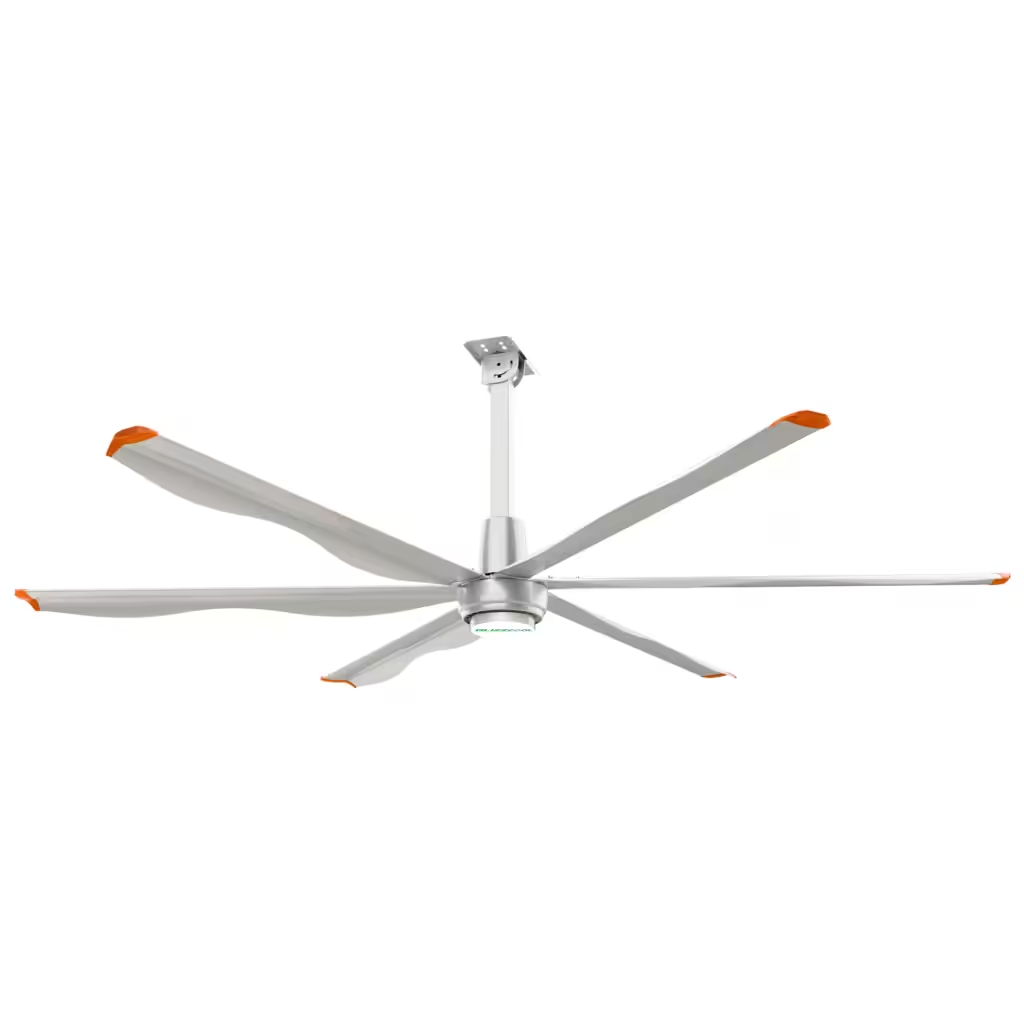
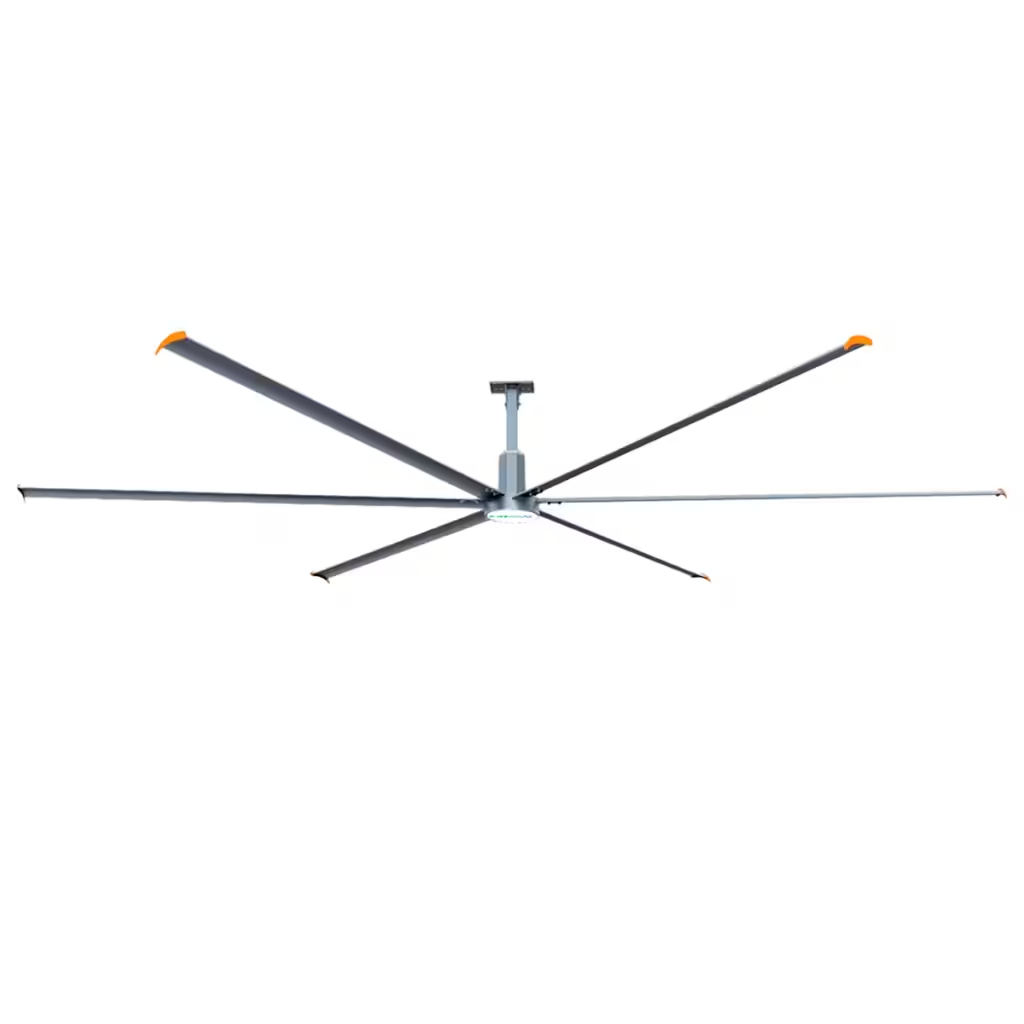
The principle that changes everything: move lots of air slowly
Most people associate power with speed. With industrial ceiling ventilation, it’s the opposite: the most efficient units are the ones that spin more slowly.
HVLS technology—High Volume, Low Speed—uses large-diameter blades that rotate between 50 and 100 RPM. At that speed, the blades don’t create a focused jet of air, but a downward column of air that expands radially when it reaches the floor, like a wave, evenly covering the entire area.
The practical result: a single HVLS industrial ceiling fan can move between 100,000 and 500,000 m³/h of air and cover up to 1,800 m². To achieve a similar airflow with conventional fans, you’d need 40 to 50 units—with all the extra wiring, mounts, maintenance, and noise that entails.
And that single HVLS unit consumes between 0.75 and 1.5 kW. Less than one euro a day to cool an entire warehouse.
When it makes sense to install a ceiling fan—and when it doesn’t
An industrial ceiling fan isn’t the right solution for every space. Being honest about this helps you make the right decision.
It makes sense when:
- The ceiling has more than 3 meters of clear height (HVLS needs at least 4–5 m)
- The space is over 200 m²
- There’s a thermal stratification issue (hot at the ceiling, cool at the floor)
- Doors are frequently open and conventional air conditioning loses effectiveness
- The activity generates residual heat (machinery, people, industrial lighting)
It’s not the main solution when:
- The ceiling is below 3 meters—in that case, a wall-mounted or portable fan is more effective
- The space is small and divided up—the HVLS air column needs clear space to expand
- You need to cool the air, not just move it—in that case, combining it with an evaporative cooler or misting system works better
Sectors where they’re most commonly installed
Industrial ceiling fans are used in very different settings, but they all share one thing: large spaces with high ceilings where air movement has a direct impact on people or processes.
Logistics and distribution — Distribution centers with open loading doors are the most common use case. The HVLS fan keeps conditions stable regardless of inbound and outbound goods traffic.
Food and pharmaceutical industry — Sectors where temperature and humidity control are part of the production process. Models with higher IP protection withstand high-humidity environments, condensation, and frequent cleaning.
Intensive livestock farming — Heat stress in cattle and pigs directly reduces production metrics. HVLS fans continuously improve animal welfare with minimal consumption compared to active cooling systems.
Sports halls — A 40×60-meter space with a game in progress generates a huge heat load. A single well-positioned ceiling fan can balance the temperature throughout the hall without creating annoying drafts on the court.
Automotive and metalworking workshops — Machinery generates constant heat and fumes tend to accumulate at height. The ceiling fan removes that heat and dilutes airborne contaminants, improving both comfort and air quality.
Frequently asked questions about industrial ceiling fans
How much clear height do I need to install an HVLS fan?
Mid-range models work well from 3.5–4 meters of clear height between the floor and the lowest point of the fan. Large-format HVLS models (blade diameter from 4 to 7 meters) need a minimum height of 5 to 6 meters for the air column to reach floor level effectively. For ceilings between 6 and 12 meters, they’re the optimal solution.
How many ceiling fans do I need for my warehouse?
A general rule of thumb is that an HVLS fan covers an area equivalent to about five times the square of its blade diameter. A 4-meter diameter model covers roughly 800–1,000 m². For spaces with columns, L-shaped layouts, or varying heights, the most accurate option is a personalized installation study.
Does an industrial ceiling fan create an uncomfortable draft?
No, if it’s correctly sized for the space. HVLS technology is designed to create a gentle, even breeze, not a direct airflow. It feels like a light outdoor breeze: noticeable but not uncomfortable. In precision workstations or areas with papers or lightweight materials, it’s worth checking the air speed at the working plane.
Can I install an industrial ceiling fan in a warehouse with dust or humidity?
Yes, with the right model. For environments with dust, sawdust, or particles, at least IP44 protection is recommended. For humid environments, condensation, or cleaning with pressurized water, IP55 or higher. This is the most important parameter to check before buying for demanding industrial environments.
Can you control the speed and direction of rotation?
Yes. Models with a brushless DC motor allow continuous speed control from a wall controller or remote. The rotation direction—summer downward, winter upward—is usually reversed with a selector on the motor or from the control panel.
What maintenance does an industrial ceiling fan require?
Maintenance is minimal. Brushless DC motors have no brushes or internal wear parts, which eliminates the need for periodic motor servicing. Occasional blade cleaning to prevent dust buildup and an annual check of the mounting points is enough for most installations.